For FAI, collaborations with universities are not only important for relying on experts in the restoration, marketing and management of its assets, but also for experimenting with new ways of disseminating strategic themes (environment, soil, landscape), using local stages as references for examples and stories that also involve non-experts.
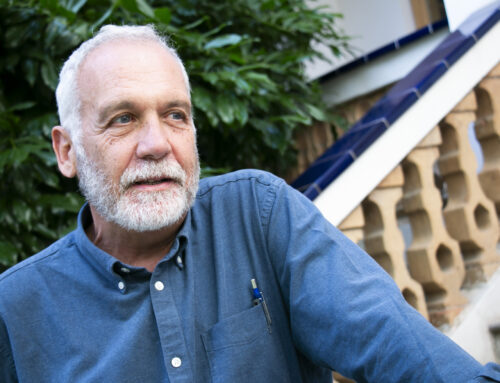
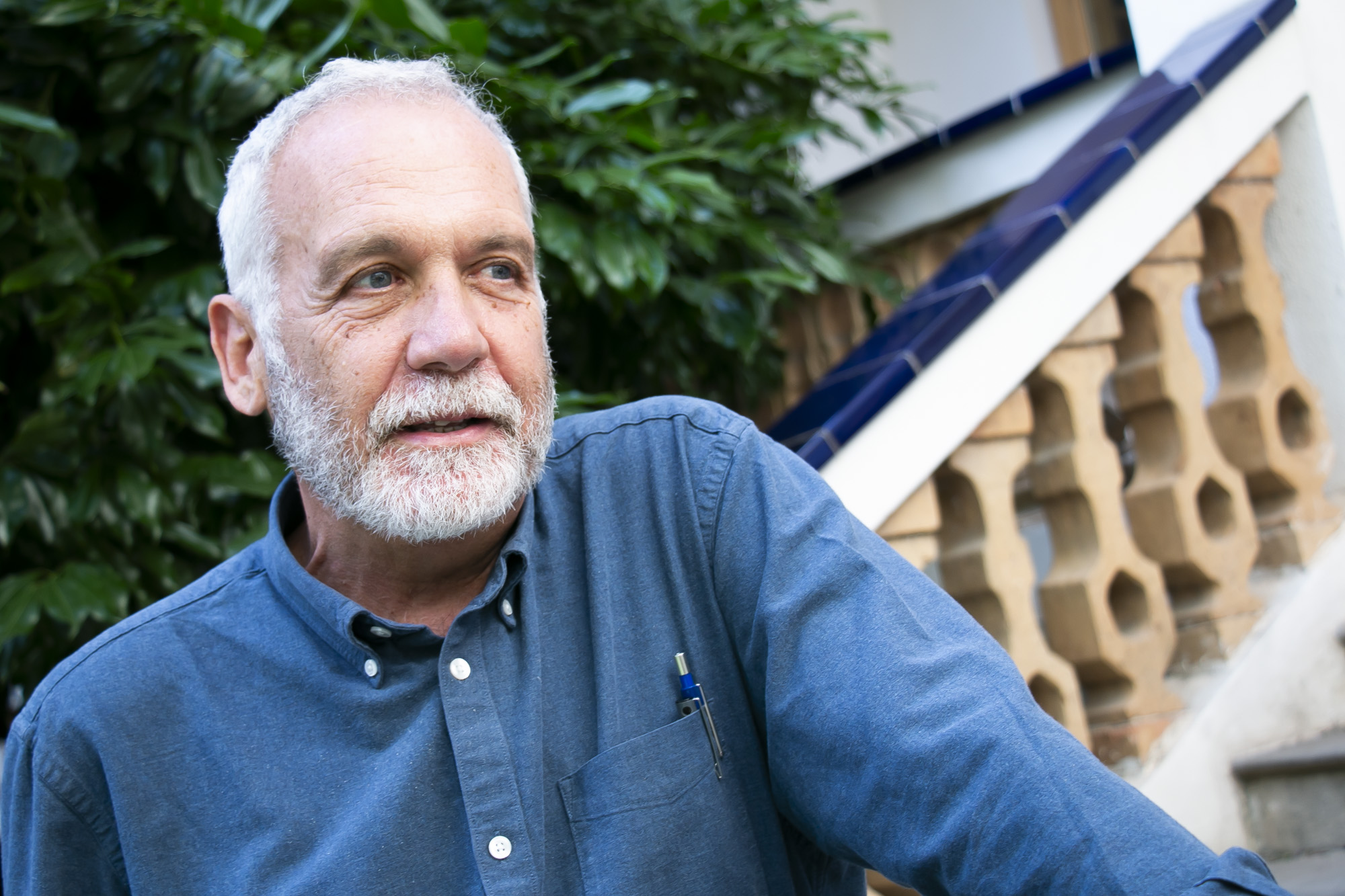
Costanza Pratesi is an environmental planner and head of External Relations and Research for the Heritage and Landscape aspects of the FAI (Italian Environmental Fund).
Click here to watch and listen to a video interview with Costanza Pratesi on FAI’s activities
—
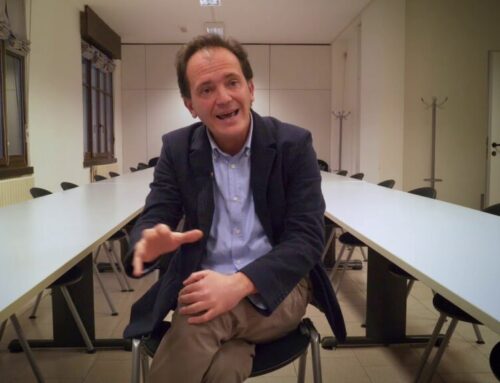
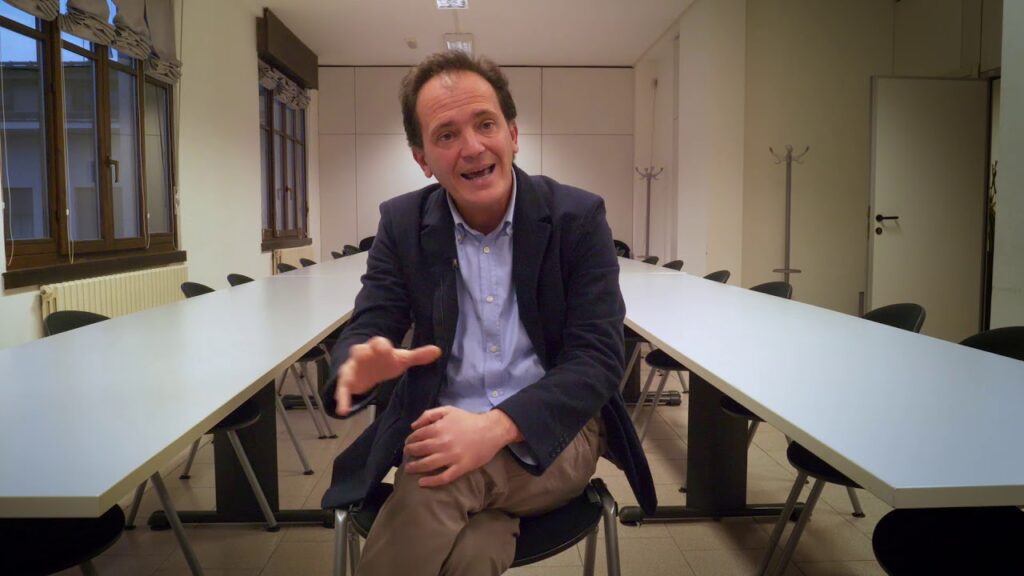
Paolo Castelnovi
I would like to start with a topic that I believe you have been familiar with for some time: the third mission of the university: that of dissemination and, as it was recently defined, ‘valorisation’.
In this sense, universities are directed to joint initiatives with other subjects (from the third sector or commercial). Fond.Landscapefor has an agreement with UNITO precisely to work in this direction. It is interesting to understand whether FAI has started or intends to start collaborations with universities in this direction and, if so, what aspects of merit and also operational aspects you are verifying in the implementation of this relationship.
Costanza Pratesi
FAI has always had many relationships with the university research world in general, perhaps also because we have a staff of technicians within us who are also lecturers.
I start with the oldest part, that of restoration, where the need for confrontation, for support, immediately emerged, not least because our cases are the subject of study and experimentation by the academic world. It has always been a spontaneous and somewhat balanced relationship, not in the dry manner of the assignment but precisely of a mutual collaboration where FAI offers itself as an experimenter or as a field of study. This mode has been repeated in all sectors, from restoration to marketing management to asset management (in particular with Bocconi). Each time ours were experimental cases, sometimes difficult to register, in which we also tried and different forms of collaboration (funding scholarships for example).
It is not easy for a foundation like FAI that works all over Italy, because we need to interact with local universities, where it is easier to find researchers with specific expertise on the places and artists that have worked regionally.
So in Liguria it seems natural for us to work with UNIGE etc., but this entails the multiplication of institutional relationships, each time to be calibrated to the specific situations.
Recently we have opened a new strand of collaborations, no longer just based on research, but on popular ‘campaigns’ (for the climate, for the university, for soil consumption, etc.). In this case we call in experts to meet the public directly: a visit, a conference, often with small numbers of listeners. It is an experiment that makes dialogue and empathy face-to-face the focus of attention: these are trials of communication to non-specialists. So a researcher who has international standing and arguments of great scientific value undertakes to tell them to the gentleman in the street who will then perhaps ask him the most basic questions in the world. It is a performance that also finds interest from the presenter and not just the listener, precisely because it makes one experience the problems (and joys) of non-scientific communication.
For example, last year for the climate we called Michele Freppa, an important researcher from the University of Turin, to Masino Castle to talk about climate change and the relationship with the Alps, which can be seen from Masino. So he shows the effects of climate change in simple words, using the view from the castle terrace as a blackboard.
Or we called Luca Montanarella, a researcher at the European Commission’s ISPRA research centre, to Villa della Porta Pozzolo (near Varese) to talk about the big topic of soil and basic environmental relations, making constant references to the place where he was speaking, in front of a local audience. The families who live in those villages listen to a story from the international expert, who talks about their area, so the children also ask nice questions, with equally nice answers from someone who is quite used to publicising. The result is a strong identity contribution, which becomes all the more valuable when it is expressed, stated, dealt with by an internationally renowned expert.
Our idea was precisely with these methods to also change the narrative a little with respect to environmental issues, to succeed in striking and involving, and also to succeed in involving, in getting people interested in issues that we believe even concern everyone’s daily life, but which very often are not perceived as directly relating to us. To take the elementary example, the climate issue is often represented with the white bear, the North Pole and the melting iceberg. It is an example that has convinced many people, but not my mum, because it is something she does not feel close to. So you keep the point in the context of familiar places and transport the problem there, with the living story and the voice of the expert who, seen on television, would not be interested.
Click here to watch and listen to this part of the dialogue on video.
We need to experiment with new ways of communicating the territory #1| P. Castelnovi and C. Pratesi
—
Not just events, but a series of initiatives to make events big and part of a widespread offer that is also accessible at different times to visitors to the FAI sites themselves.
—
Paolo Castelnovi
Have you also thought about a follow-up? That is, having set up a system of contact with the local community through small, meaningful events, does the contribution end the moment the conference is over, or does it activate a system of feedback, monitoring, filming or papers that are made available.
Costanza Pratesi
We always go on a very popular model, for example we take the opportunity to do a video-pillar interview with the expert to give us the information in extreme synthesis to put on the pages of the site, in our communication channels, which are all the social media you know, and then in the newsletters that go to our subscribers or contacts. The numbers, all in all, are quite important, so we continue to circulate this material.
On the other hand, we are thinking of reducing some of these communications to podcasts, in any case to be enjoyed directly on site (e.g. Freppa’s presentation in Masino, to be listened to with headphones on the parterre of the castle.
Many of these contributions are related to the historical architectural part of our assets, but there are also beginning to be some that deal with other topics, in any case to be enjoyed on site.
We are also trying to interest the widespread volunteer network (those who organise the FAI days). We want to try workshop-type meetings with them, however aimed at helping them understand the specificities of the territories.
Click here to watch and listen to this part of the dialogue on video.
We need to experiment with new ways of communicating the territory #2| P. Castelnovi and C. Pratesi
—
Insights into the underlying themes (climate change, disulo consumption…) become more meaningful and understandable if they are backed up by real cases: experiments with FAI assets.
—
Paolo Castelnovi
In this rich scenario you have outlined, is there a project you care about, that you consider a priority?
Costanza Pratesi
I am intrigued by the theme that is emerging concretely when addressing the strategies of mitigation and adaptation imposed by global change by finding them on our assets. It is emerging that the keys to the innovation required by the serious and unusual situation can only be found by starting from knowledge of places, which invests and conditions even the most technological solutions. I believe little in innovation that is thrown down from on high, standardising it on the whole of Italy or the whole of Europe, I believe much in the need to develop knowledge, skills and a focus on reading one’s own territory to be able to find, to adapt those possible answers to the potential and characteristics of places.
It is a fundamental approach, which becomes evident for example when we talk about water, for which we are going to rediscover and refine all the traditional practices, to recover them in their local declinations, because there is a world of knowledge that can be connected to innovation. It is a huge job that I would like to see more and more recognised also in its value of reconnecting tradition and innovation, all based on local resources and conditions.
Click here to watch and listen to this part of the dialogue on video.
We need to experiment with new ways of communicating the territory #3| P. Castelnovi and C. Pratesi
—
The willingness to narrate in a popularised manner is widespread and amuses researchers. In addition, the theme of storytelling is also favoured by favouring stories, the narration of biographical events that are emblematic of themes and problems that have so far often only been described in technical form.
—
Paolo Castelnovi
Continuing the conversational tone of our meeting, I am very interested to see if there is often that interest of the lecturer who comes to narrate and enjoys it and finds it interesting to participate by recounting complex topics in a simplified way. Is this an aspect of quality to be experienced that you think meets with interest at universities, which are often somewhat self-referential?
There is a whole mechanism at play in the academy today (e.g. young PhD students who very often impale themselves in as high a language as they can to ape the professors) that could instead be turned to become a way of chatting well with ordinary people and widespread culture. So it is important to understand whether you have found in quality people such as researchers or scientists, even a real, amused interest in being disseminators.
On the other hand, we have not yet solved the problem of how to hook people’s interest in a lasting way beyond the event. We have committed ourselves to providing people with important content also in the form of events, putting them in a machine of partying, of playing, of re-presenting content within a somewhat exceptional situation, feeling in an exceptional situation.
I believe that this is very nice to start with, but that it remains a childish mode. When the urgency of reflection arises, and by now environmental issues impose it, the problems we have must not only be known in an episodic manner, but they also begin to demand a minimum of involvement and taking responsibility.
What is needed is for people to get into the habit of experiencing the underlying issues a little on their own, to go and look for updates when they feel like it, not just when an organised machine like the FAI offers them. And then it must be planned how to maintain the effect of the exciting testimonies that are only found in the event (even a demanding one, such as a scientist’s speech).
Costanza Pratesi
Interesting problems, which we are also trying to address within FAI.
Let’s start with the way we organise special visits, which are requested by those who manage the properties locally. Our centralised services help to find the contacts, the experts. And it is quite normal that researchers or scholars willingly join in, without worrying about having audiences of 20 or 30 people and having fun explaining the abc.
There seems to be a widespread desire on the part of those who do research to tell others about their work, to disseminate it outside of the academic circle where only specialised papers circulate.
I very much agree that we need to address the topic beyond the event, because it is true, this is somewhat the way it is used today (to talk about agriculture we have to do Expo).
Of course, we must then manage to go beyond, because the event hooks, pleases, entertains, and so the effort is to grow the seed of curiosity in the listener.
This is also the objective of this new narrative for the Fai climate campaign.
This is the goal, we then need to understand how much we can achieve.
We are encouraged by the numbers of the public who listen to us on environmental issues beyond the expectations we had, thinking that we had a target audience very focused on historical, cultural and artistic themes. Being able to interest people on other topics as well makes you realise that a seed is growing that has finally taken root.
In addition to events, stories help a lot.
Storytelling helps to bring people together in a way that is perhaps less childish than the event.
Now to give an example: We have an alpine pasture in Valtellina, which has been entrusted to a farmer to whom we have bought cows. At a time when we are discussing the abandonment and repopulation of the mountains, we thought it would be useful to have the farmer tell his story. we go and have our farmer speak, and he tells his story. It is obviously a peculiar story, which becomes somewhat emblematic of a world that has few safeguards, where everyone has to cope alone with the difficulties they encounter. In short, a very different story from what is circulating in the media.
His only way to grow, to enrich his company, had been to embrace green issues, because they differentiated him from others. But he could not have done it if he had not had the opportunity to run the FAI alpine pasture. Moreover, one of his sons is starring in the film Otto Montagne (Eight Mountains) from Cognetti’s book. And so the story is coloured by the meeting with the film crew, with the presentation in Cannes where the whole family attended…
Here too, the reading of a story, I hope, can raise questions, awareness about the world, about difficulties, about important choices. This is also a way to talk about issues such as agriculture, the landscape and Alpine communities.
It is easier to capture the interest of the press, if stories are proposed, rather than projects and the availability of goods. An article that is about the story and then tells about a specific farming problem from the story also attracts the press, rather than say an enlightening article about agriculture.
Perhaps stories lie within every reality and there are many of them, they are always fascinating.
Click here to watch and listen to this part of the dialogue on video.
We need to experiment with new ways of communicating the territory #4| P. Castelnovi and C. Pratesi
—
It is now necessary to experiment with different and multimedia ways of telling stories, also to cope with reduced competence in verbal expression, especially in the written form. The risk is that of a loss of quality of content
—
Paolo Castelnovi
There is certainly still a strong core of reading lovers who prefer stories to essays, and I think it is important to defend this rich and passionate mode of knowledge, but in my opinion this is still a twentieth-century approach, very much in decline compared to the trend of the younger generations’ relationship with culture.
I think we have to look for cultural spaces where young people are involved, where they are made aware that they have to put their own spin on it, and they have to take responsibility.
We have to grasp the need of young people to express their subjectivity and interact in learning. In this sense, I think more fractioned communication is preferred over long, winding stories. Stories are suffered, like a TV series, in which the listener has no room for intervention.
Costanza Pratesi
I agree that it is an important issue. We also make it a challenge. We do a competition in schools every year. This year’s is entitled ‘Protecting heritage by telling it’. Even though at school the children are guided by the teachers (and this changes the perspective a little bit) we tend to learn how to tell through images, this has a nice response.
This year, schools (and kindergartens) are asked to bring products that tell a story about a place they choose as representative of their own. At kindergartens, they make collages, or even theatrical performances, creative marvels: this is something that really needs to be cultivated. In high school the means change, more photography, more video clips, a bit of what they call a reality task. There are many who participate, with different products, some really quality, others far too simple. In any case, it is always the discovery of one’s own territory, because otherwise the value of storytelling is lost in the younger generations.
Paolo Castelnovi
We have found that this desire to tell often finds a limit in the now widespread inability to tell in words. That is, the word is no longer a useful and easy tool at the disposal of young people.
The word is not attractive, it is as if they use it out of duty. I have not yet understood whether this happens because it is tiring, because once a generation no longer acquires expressive technique among its first cognitions, it is really complicated to recover it, given that people no longer read, etc., etc., or because there really is by now a forma mentis that turns to something else. And if so, we need to understand what this other is and how we too can use it to convey the content that interests us.
Costanza Pratesi
Of course. It also helps that if the form of expression changes, the quality of the message continues. It is good to communicate with photographs, but the photographs must say something as the text said it before. It is complex work, which starts with refining observation.
The work of the kindergarten teachers is extraordinary, because it is really important to cultivate the habit of observation, to maintain curiosity and the ability then to express it. Then, if it is words or pictures or a play and one speaks with the body, many different ways of expression are welcome. What worries us is the lack of quality of the message, because almost always by forgetting the appropriate use of words, the media becomes visual but of poor quality. Work also needs to be done on evaluation: it is very important to get the new generations used to appreciating the differences between a rich message and a poor message.
Click here to watch and listen to this part of the dialogue on video.
We need to experiment with new ways of communicating the territory #5| P. Castelnovi and C. Pratesi
—
A problem to be addressed, even with multimedia, is how to keep the focus on the content and how to maintain the competence of the children to express their own research and opinions.
—
Paolo Castelnovi
This contribution is valuable because it is right at the heart of the issues we are discussing. I return in this sense to the theme of storytelling concerning one’s own home, which I felt was central as you put it: a facilitator of understanding.
That is to say, if I am told about a theme declined on what I know most about, about my own home, my own landscapes, I am more willing to understand the terms of that theme and so I am more easily engaged. This applies to climate change but it can apply to anything else.
At this point we can also think of the reverse, if the telling is done directly by the inhabitant. That is, being able to tell one’s own story can become one of the ways to start overcoming a series of limitations that children suffer today, if they are not familiar with a fluid language practice, like the one we used to learn in the schools we attended. Perhaps it is a way to experiment and we will probably also find teachers willing to try it out by organising a network of multimedia storytelling in which each one illustrates his or her own territory to the others.
Costanza Pratesi
It is really all to be experienced. Today we see this impoverishment on the surface, but we have to delve deeper: maybe you go digging, and you find that many still write a diary, perhaps in a shorter form, but still the pleasure of writing resists. If you then think about how many people in Italy write: certainly among everyone’s friends there is someone who has tried to write something.
I believe that the competence for storytelling that we have, if not through writing then at least orally, which is quite atavistic and remains even among young people, should not be extinguished and should be strengthened. There is a need for work to cultivate this almost ancestral need to tell and tell about oneself, as shown by the success of the podcasts on telling about one’s own landscapes launched this spring by Scurati on the FAI page.
Click here to watch and listen to this part of the dialogue on video.
We need to experiment with new ways of communicating the territory #6 | P. Castelnovi and C. Pratesi
—
The real problem is perhaps not the media to be used, but the quality of the content, the ability to read the phenomena in depth. Among school children there is now much superficiality, there is little curiosity even in their own surroundings. If we take away the excellences that always amaze you, in the large number there is a lot of banality. That which needs to be combated perhaps more than anything else.
—
Paolo Castelnovi
But how do we do it? What can we appeal to? One of the hypotheses we made was to appeal to the sense of vanity, of narcissism, that when you tell your own story, it stimulates you to document yourself, to try to make a good impression. But on the other hand it is indispensable that there be on the part of the listener an interest in making the other’s tale a piece of their own heritage, otherwise it is an exchange between monads, between separate worlds.
Costanza Pratesi
Of course. In all competitions with schools, any photo that arrives is flaunted as an image of the most beautiful landscape in the world, which is one’s own.
This pride in one’s own land has to be subjected to criticism, so that what really is of quality stands out from the rest and is therefore the only one that will be able to impress and fit into the imagination of others.
Click here to watch and listen to this part of the dialogue on video.
We need to experiment with new ways of communicating the territory #7 | P. Castelnovi and C. Pratesi
—
Ways of telling stories between different experiences should be experimented with, which broaden the vision and interests of young people. In this sense, the initiative of the Friends of FAI’s Bridge between Cultures is very interesting, mainly animated by foreigners who tell common places read with their own eyes.
—
Paolo Castelnovi
On the other hand, we are discovering that part of the new sensitivities is linked to the fact that the sense of identity is no longer strictly linked to one’s own territory, but rather is based on one’s own life that takes place over many territories, i.e. one’s experience as an explorer takes on value rather than that of an inhabitant.
If this were true, the school should also be able to give children this feeling of being in a phase of civilisation in which wandering around and getting to know the territories is an important part of one’s culture, and one’s life experience. From that point of view, another person’s account becomes a piece that one adds to one’s own direct experience, and thus one becomes critical, i.e. able to enter into the merits and also interact with the discourses of others. One becomes an active interlocutor and not just a young person applauding to be applauded when it is their turn, as is often the case in these presentations.
If one could work with teachers in this perspective, there is a world to explore.
However, we have ascertained that we need to work over several years, spot experiments are not enough, to consolidate an innovative way of doing things that is unfortunately squashed in the middle of traditional school curricula.
But even among adults, this exchange of roles between those who present the problems and those who listen is happening more and more often. Many times we have seen battles for landscape quality led by tourists, rather than by inhabitants.
For example, the FAI’s Places of the Heart. Explored statistically, since their first season, they have been at the centre of the presenters’ sense of identity. Then, over the years, the reports become more and more evidence of clashes and initiatives for protection and defence, where often those initiatives are taken by tourists or holidaymakers rather than by inhabitants.
And this is interesting because it is probably on the alliance between aware locals and tourists that future battles for landscape quality will be based.
What is lacking is permanent instrumentation in favour of these initiatives, which otherwise appear as straw fires, episodic.
The only events that are in any case valuable if they are well organised (as FAI almost always does), such as those of performing art, have the limitation that once the event is over, it is all over. These days it is becoming an easy excuse for young people not to take responsibility: they participate willingly, do the event and then that’s it.
Instead, tools must be found so that things remain and become workshops, places where one can continue to think. It is true that whatever the media, what interests us is the quality of the message, but it is also true that it is necessary to allow the message to be deposited, to have time and space to interact and metabolise the new content, without it vanishing and becoming an emotional memory, of which nothing is deposited in an immediately useful way.
This is why FLF continues to invest in forming archives, repositories that are immediately accessible at any time, such as Atlasfor.
Costanza Pratesi
In this regard, another FAI experience comes to mind, different from those mentioned so far. It is called Bridge Between Cultures. Here we train people from all over the world, and these people from India, France, Finland, Turkey, Arabia, tell in their own language about the places where they live today.
They are not interpreters of a story someone else has told them, but they reinterpret with their own gaze and sensitivity the place they are going to tell.
Their story is told in the language to other foreigners and nonforeigners who know the language. In this way, not only the tale is shared, but also the gaze, the interpretation.
For example, Villa Necchi Campiglio in Milan has several ancient, Chinese vases, and a Chinese girl had done a bit of research to tell about this world. In these cases, a glance emerges, an ability to narrate that establishes a bridge between cultures.
It is a project that is very popular, and we have developed it in many cities in Italy.
We now have an Indian girl, a staff member at FAI Central, who is following this project.
Ponte Tra Culture was started by an association of Friends of FAI, so now it is still them, they are always carrying it on, it is spreading all over Italy.
They are very heterogeneous groups, truly multi-ethnic, who manage to be non-trivial in this way of telling the story of places, from which still other important messages pass, of cultural exchange, of mutual welcome.
Click here to watch and listen to this part of the dialogue on video.
We need to experiment with new ways of communicating the territory #8| P. Castelnovi and C. Pratesi
—
The wealth of FAI’s initiatives is a heritage to be made available to schools and businesses in the third sector, to share a phase of re-founding cultural dissemination, particularly for the youngest.
—
Paolo Castelnovi
This chat of ours reveals many FAI initiatives that we did not know about, but which are oriented towards the same goals as ours, with a harmony on the issues to be dealt with that is truly extraordinary. . I am reminded of the Prince of Salina who said that in Donnafugata he had never seen many rooms and that a house whose rooms you know all is not even a house. It is indeed good to have so many arrows in one’s bow that one always forgets a few and that’s OK. But in this direction, however, it seems to me that your ability to work can also be helped, honed, if we put these things out there more.
For example, it would be good to be able to offer these young people and also the teachers a certain variety of options and a carnet of workshops, where everyone can choose.
Costanza Pratesi
It is good that the whole carnet is known and I would have liked today to find a way to show the whole catalogue, but it is not easy, because we do too many things.
Then they are also initiatives that are reborn on the push of someone and gain momentum if they find interest, in a totally experimental way. Nothing is born from cold marketing studies, but rather from the desire to try, even having fun. It is important to think, to return, to understand some choices or the reasons for others. Then we often realise that, even here, messages that are too complex, things that are too complicated people don’t understand.
An example: just the other day they passed me an email saying, ‘but that property that has passed to the FAI is neglected, it’s abandoned’. Worried, I went to see it: it was a place of the heart, where FAI had nothing to do with it.
From the outside it is also hard to understand exactly what is being done in the Foundation, and you have to take into account the distracted mode of the public, which makes its own interpretation. So it is not easy, to convey also a variety of activities, of initiatives.
The president always says to people who come as new employees to FAI, ‘before a year you won’t understand FAI’. It’s also a theme of research, the struggle to restore complexity in a world that looks for quick images.
Paolo Castelnovi
I suggest that this very issue be the focus of attention because it seems that cultural enterprises in Europe are finding it very difficult because they are no longer able to tell their content in terms of concreteness and tangible results. If this is true, FAI is just ahead of the others, for the concreteness of its heritage and also of its way of doing things, in which the Milanese origin that you have, the Lombard bourgeoisie, that does not get lost in too much chatter, counts. This meeting of ours, with the wealth of factual examples you have put forward, perfectly illustrates this now rare virtue. Thank you.